
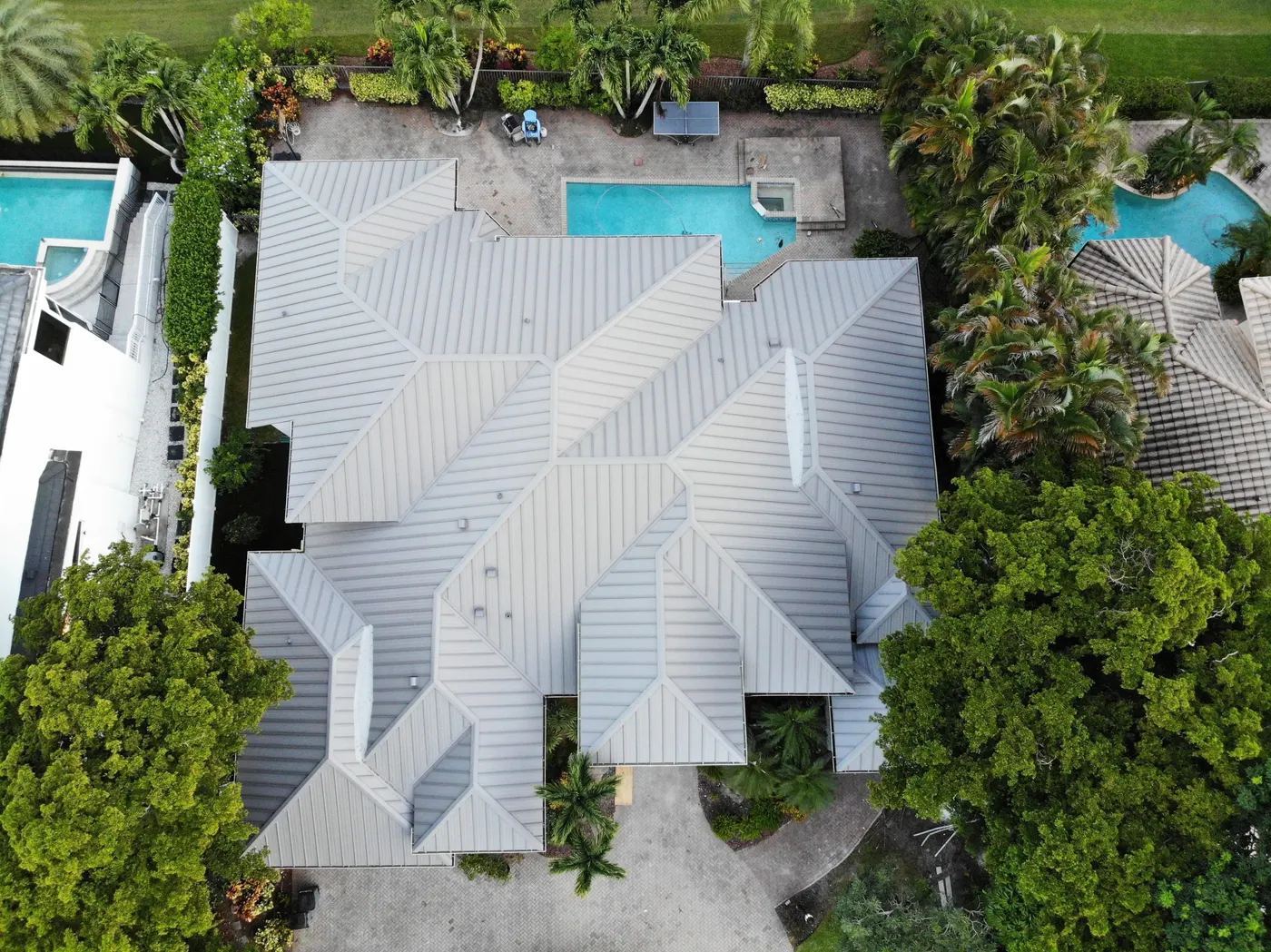
Miami roofs live harder lives than roofs almost anywhere else in the country. Year-round UV, salt air near the coast, heavy summer rain, and High-Velocity Hurricane Zone wind rules all shorten how long a system lasts — and how long insurers will keep covering it. If you’re weighing another patch against a full tear-off, use these five signs as a practical checklist, then get a licensed inspection with photos and a written estimate.
1. Your roof is past its useful life in South Florida sun
National “average lifespan” charts assume milder climates. In Miami-Dade and Broward, asphalt shingles often need serious attention in the 15–20 year range, and underlayment, flashings, and flat-roof membranes can fail sooner under UV and heat. Tile can last longer on the surface while the underlayment and fasteners quietly give out underneath.
Florida’s insurance market has made age even more urgent — but state law also sets floors that many homeowners do not hear about. Under Florida Statute 627.7011, an insurer may not refuse to issue or refuse to renew a homeowner’s policy on a residential structure solely because the roof is less than 15 years old. For a roof that is at least 15 years old, the insurer must allow you to get a roof inspection by an authorized inspector (at your expense) before requiring replacement as a condition of issuing or renewing coverage. If that inspection shows the roof has 5 years or more of useful life remaining, the insurer may not refuse to issue or renew solely because of roof age. Licensed roofing contractors are among the people who can serve as authorized inspectors under the statute. Exact underwriting still varies by carrier and product — confirm with your agent — but the statute is the starting point for any “age cliff” conversation. Policies issued or renewed on or after July 1, 2022 are covered by these rules.
2. The same spots keep leaking after “repairs”
One leak after a storm can be a fastener, a cracked tile, or a failed boot. The same valley, chimney cricket, skylight curb, or flat-roof seam leaking again and again usually means the waterproofing layer or decking underneath is worn out. Patching the symptom without fixing the system burns money and invites mold and attic damage before the next named storm.
A proper diagnosis looks past the surface: underlayment condition, fastener pull-through, wet insulation, and soft decking. That is the difference between a targeted roof repair and an honest recommendation for roof replacement.
3. Widespread missing, cracked, or slipped materials
South Florida wind lifts edges, walks fasteners, and cracks brittle tiles. A handful of missing shingles after a squall is common. Large fields of cracked tile, curled or granulated-bare shingles, slipped courses, or open seams across a low-slope section are replacement signals — especially when thermal cycling has baked the system for decades.
Miami-Dade sits in Florida’s High-Velocity Hurricane Zone (HVHZ). Roof replacements here generally require permitted work, products that meet Florida Building Code wind requirements, and inspections. For many assemblies that means Miami-Dade Notice of Acceptance (NOA)–approved products installed to the approval and the code — not whatever leftover material is cheapest. We install tile, shingle, metal, and flat systems to those rules across Miami and nearby cities.
4. Soft spots, sagging, or daylight through the attic
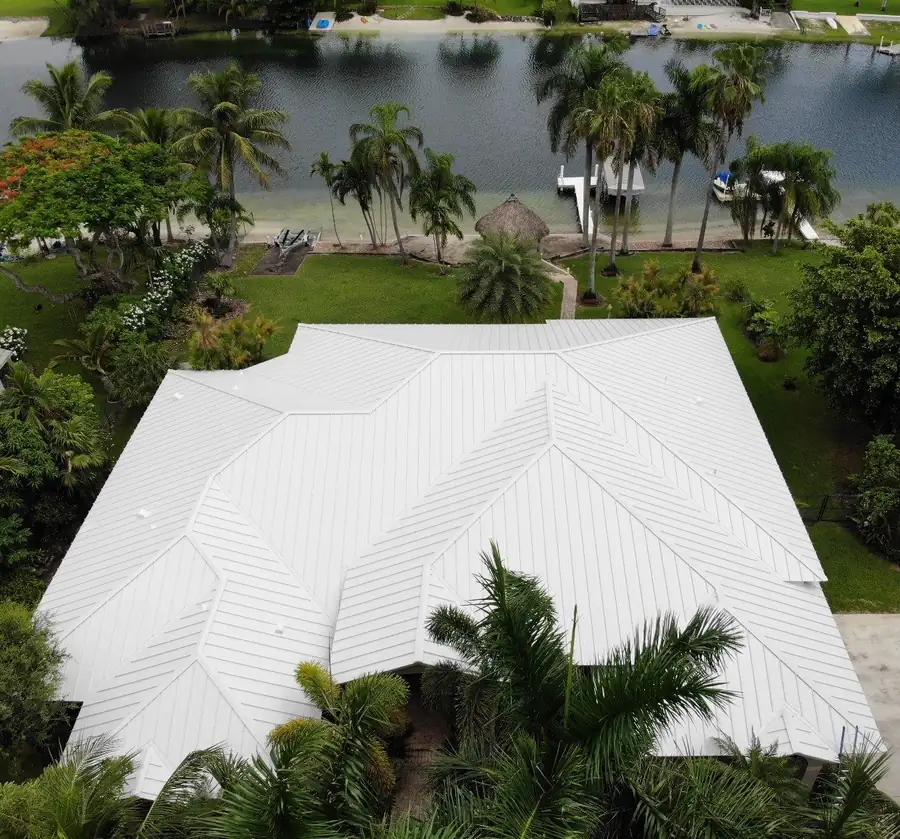
Soft decking underfoot, wavy eaves, stained sheathing, or daylight in the attic mean moisture has reached the wood. That is structural, not cosmetic. Continuing to “seal from above” while the deck rots is how small repairs turn into emergency tear-offs after a tropical storm.
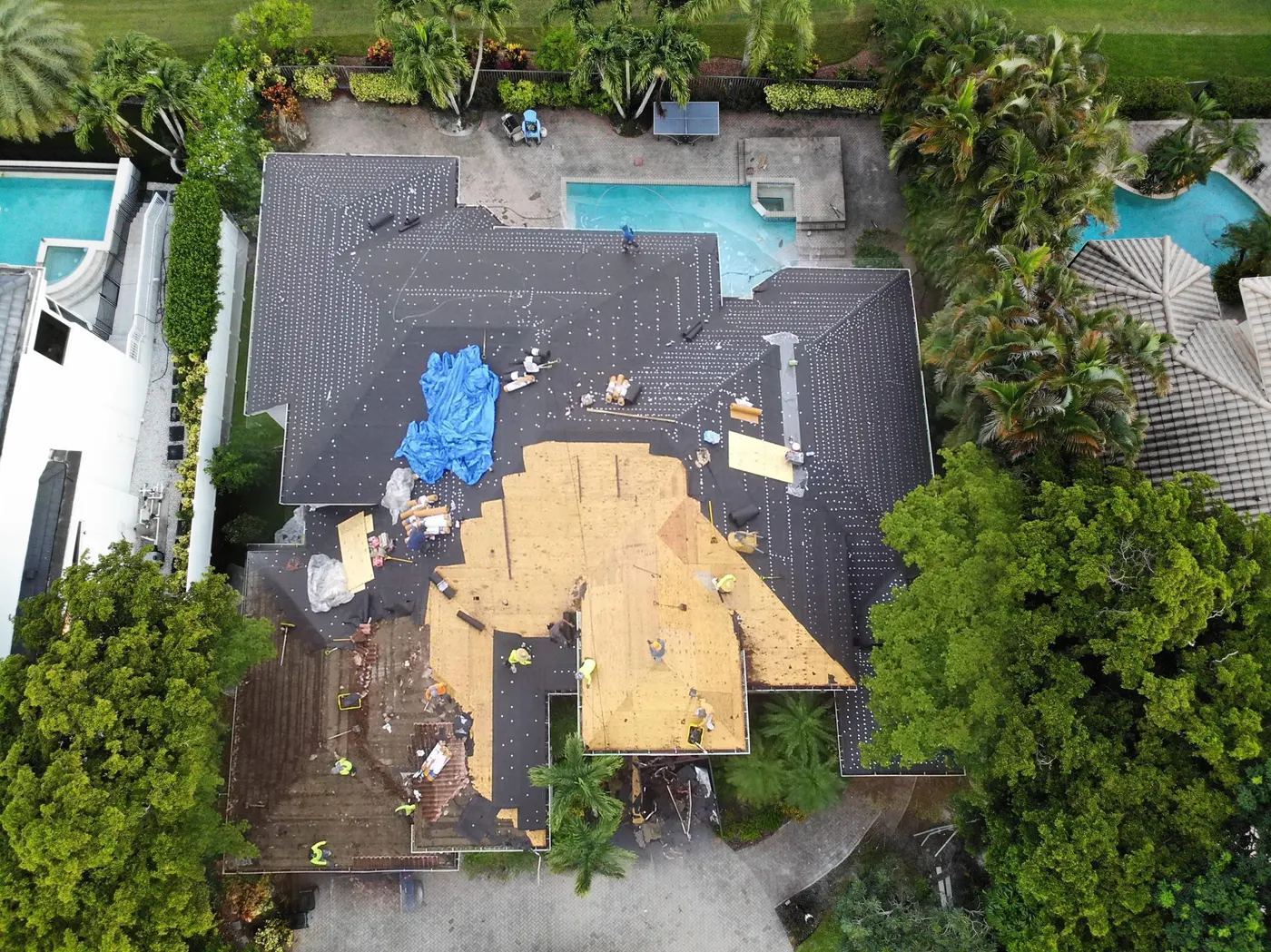
On a full replacement we inspect the deck, replace bad plywood or planks as needed, and rebuild the waterproofing stack for HVHZ conditions — including underlayment, flashings, and ventilation details that match the roof type. The in-progress photo at the top of this page is a Proper Roofing tear-off: old covering coming off, plywood deck exposed where sections are open, and synthetic underlayment already down on the finished planes before the new covering goes on.
5. The 25% rule, a sale, or an insurance deadline forces the decision
Florida’s 25% rule is easy to overstate. In the Florida Building Code (Existing Building), when 25% or more of a roofing system or roof section is repaired, replaced, or recovered in a 12-month period, the code can require the entire roofing system or roof section to be brought up to current code — unless a statutory exception applies. Florida Statute 553.844(5) creates that exception: if an existing roofing system or roof section was built, repaired, or replaced in compliance with the 2007 Florida Building Code, or any subsequent edition, and 25% or more of that system or section is being repaired, replaced, or recovered, only the repaired, replaced, or recovered portion is required to meet the Florida Building Code then in effect. The Florida Building Commission must incorporate the exception in the code, and a local government may not adopt an ordinance that amends it. The 2007 Florida Building Code’s effective date for permits is commonly treated as March 1, 2009, so older roofs that predate that compliance path are the ones most often forced into a full section upgrade when damage crosses 25%. How a “roof section” is drawn and how your building official applies the rule still vary — your AHJ and a licensed contractor should apply the statute to your roof, not a blog example. Read Fla. Stat. § 553.844(5).
Sales and insurance create the same fork. Buyers, lenders, and carriers often want a recent roof or a clean inspection. If you are listing, refinancing, facing a wind-mitigation or 4-point form, or answering a non-renewal letter, get a licensed inspection with photos you can share — and a clear repair-vs-replace line-item estimate. Remember the 627.7011 protections above before you assume a carrier can drop you “only” for age.
How we document your roof on inspection
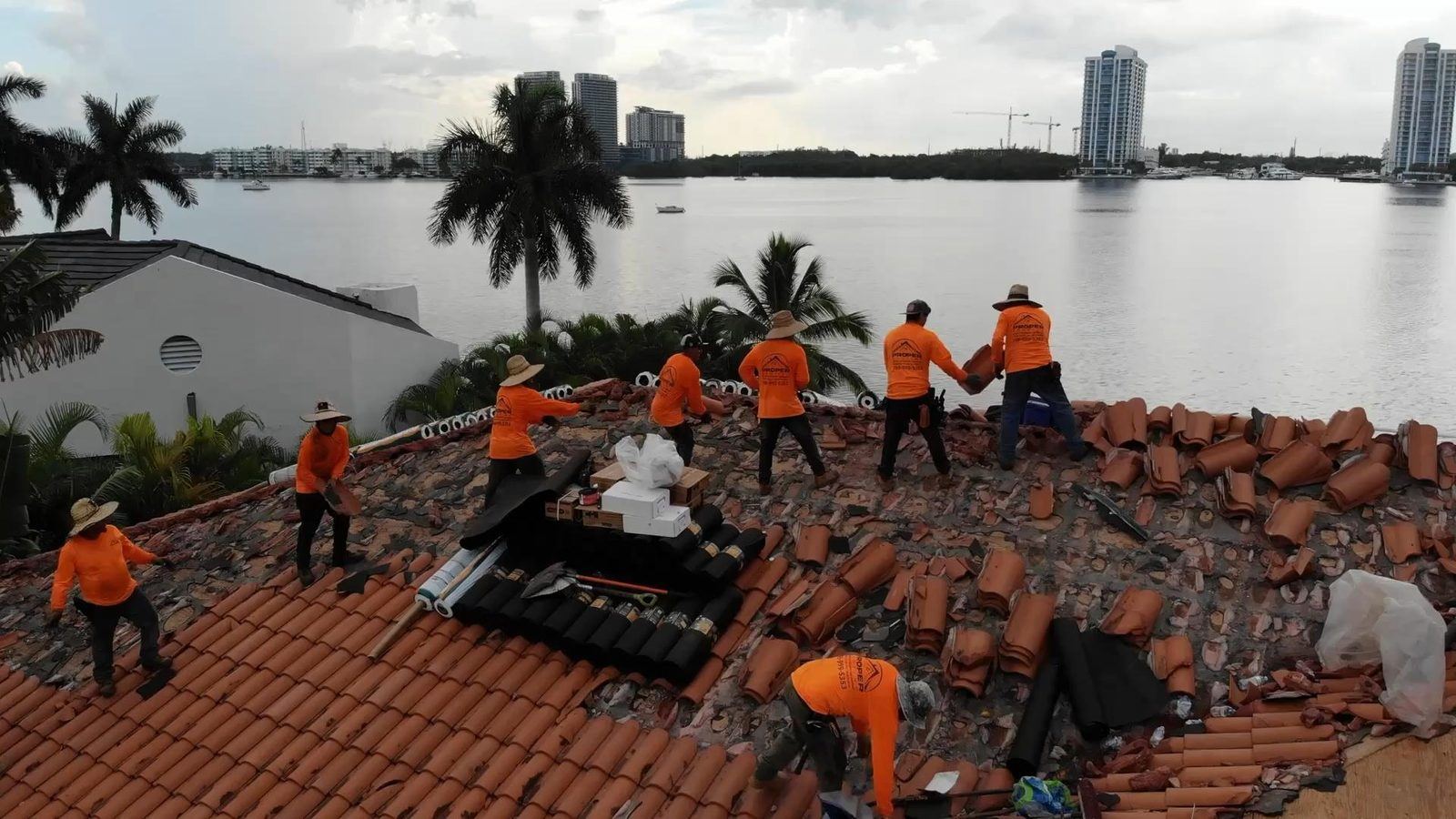
On a Proper Roofing inspection we photograph conditions — covering, flashings, and decking concerns where visible — and give you a written repair-vs-replace recommendation you can share with your insurer or buyer. That documentation is about your roof, not a marketing case study.
What a Miami roof replacement typically costs
Roof replacement cost in Miami varies by size, material, tear-off, decking repair, permitting, and inspections. For a number that fits your home, schedule a free inspection and free written estimate — call 786-999-5353 or request an estimate. See also Financing.
Repair vs. replacement: how we decide
We do not push replacement to pad a ticket. A repair is the right call when damage is localized, the underlayment and deck are sound, and the remaining system still has useful life under local code and your insurer’s rules. Replacement is the honest call when leaks are systemic, materials are at end of life, the deck is compromised, the 25% rule (or your AHJ) will force a section upgrade on a pre-2007-compliant roof, or your insurer will not keep the policy without a new roof even after a 627.7011 inspection path.
Proper Roofing Inc. is a Florida Certified Roofing Contractor (CCC1331964) and Certified General Contractor (CGC1525978). We pull the required permits and schedule inspections for the roofing work we perform. Free inspections and free written estimates are available — call 786-999-5353 or request an inspection.
What to do next
- Schedule a licensed inspection — photos, findings, and a written repair-vs-replace recommendation.
- Ask about HVHZ, NOA products, and permits for your city so the bid matches what the building department will approve.
- Talk to your insurer or agent about age rules under Fla. Stat. § 627.7011, wind-mitigation credits, and claim documentation if storm damage is involved. We document conditions; we do not act as a public adjuster or promise coverage.
- Review financing if you need to spread cost — see Financing for PACE and other options. Approval and terms are set by the program administrator, not by us.
Ready for a straight answer on your Miami roof? Contact Proper Roofing or call 786-999-5353. We’ll tell you whether you need a repair or a full roof replacement — and what code and insurance are likely to require before hurricane season.
About this article Author: Proper Roofing Inc. Technical review: Gil Ksheshiver, Owner, Proper Roofing Inc. Sources: Fla. Stat. § 553.844 · Fla. Stat. § 627.7011 Draft prepared: October 28, 2026 (America/New_York) Last updated: October 28, 2026 (placeholders removed; owner technical review) Verify licenses at myfloridalicense.com.
Serving Miami, Hollywood, Miramar, Fort Lauderdale, and nearby South Florida communities. Office: 1011 Ives Dairy Rd Suite 210, Miami, FL 33179.