
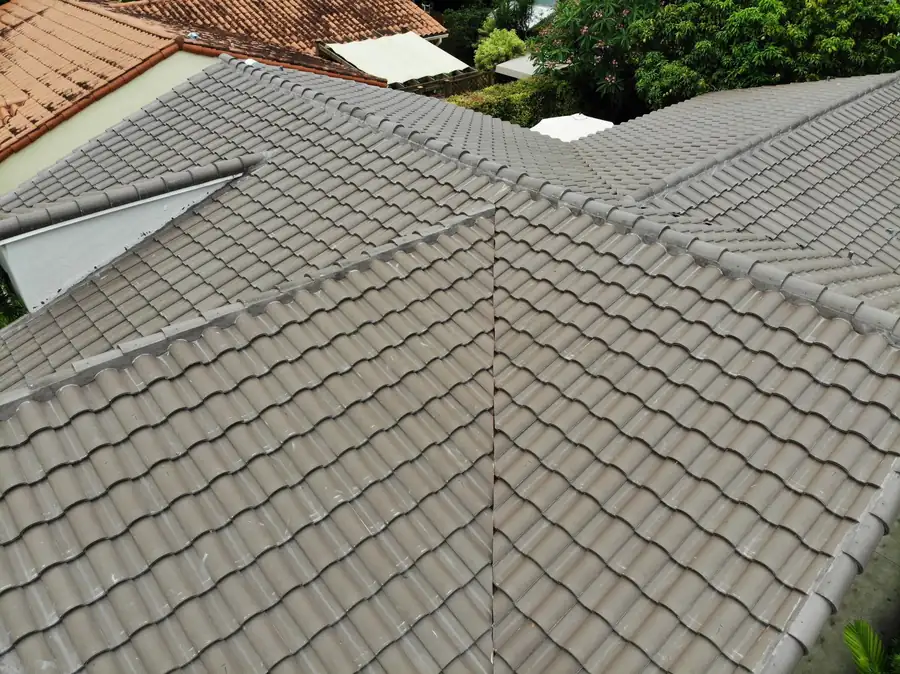
The honest answer to "what does a roof replacement cost in Miami-Dade?" is that it depends on five things more than anything else: the roof's size and pitch, the material you choose, what we find under the old roof, what the High-Velocity Hurricane Zone code requires for your house, and how much permitting and inspection the job carries. This guide walks through each one so a written estimate makes sense when you get it — and so you can tell when two bids are not pricing the same roof.
We are not going to post a sticker price per square foot here. Two Miami-Dade homes with the same footprint can land far apart once tear-off layers, rotten decking, and county requirements are counted, and a number pulled off the internet is not a number you can budget on. What we can do is show you where the money goes.
What drives roof replacement cost in Miami-Dade
Every bid we write is built from the same pieces. If one bid is much lower than another, it is almost always missing one of these.
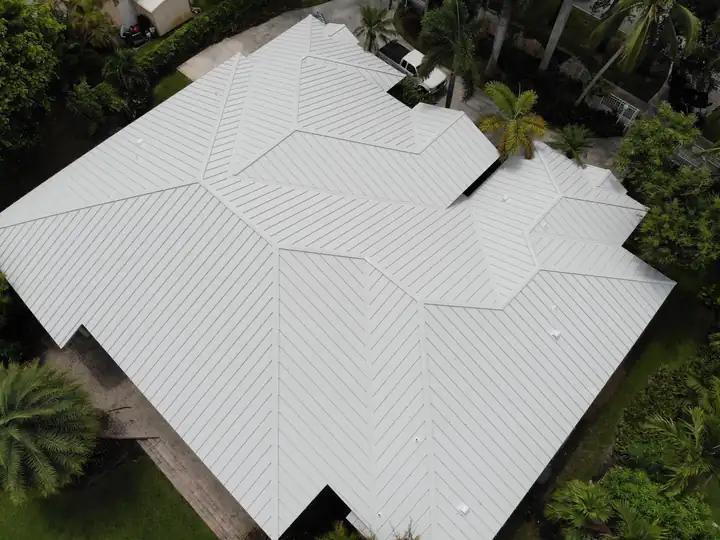
1. Size, pitch, and shape. Roofers price by the "square" — 100 square feet of roof surface, not floor area. A hip roof with several valleys, dormers, or a second story takes more material, more waste, and more labor than a simple gable of the same size. Steep pitches need extra safety setup.
2. Tear-off. In Miami-Dade a replacement means removing the old system down to the deck. More layers, heavier material (tile is far heavier to remove and haul than shingle), and tight lots with no dumpster access all add cost.
3. Decking and wood repair. You only learn the full condition of the plywood or planks once the old roof is off. Years of slow leaks, salt air near the coast, and attic heat soften decking and rot fascia. A good estimate prices wood replacement as a clear line item (per sheet or per linear foot) instead of hiding it or ignoring it.
4. Material and system. Concrete tile, asphalt shingle, standing-seam metal, and flat/low-slope membranes each carry very different material and labor costs — more on that below.
5. Code, permits, and inspections. This is the part that makes Miami-Dade different from most of the country, and it deserves its own section.
Why the HVHZ and NOA rules raise the cost of a Miami-Dade roof
Miami-Dade and Broward sit in Florida's High-Velocity Hurricane Zone (HVHZ), the strictest wind section of the Florida Building Code. In practice that changes the price of a roof in three concrete ways:
- Approved products only. Roof coverings and many components need a Miami-Dade Notice of Acceptance (NOA) or equivalent approval for HVHZ use, and they have to be installed the way that approval says — fastener type, spacing, adhesive, underlayment. Approved products cost more than generic stock, and the installation takes longer.
- Heavier fastening and underlayment. HVHZ installs typically call for more fasteners, specific underlayment systems, and attachment methods sized to the design wind pressure on your roof. Edges and corners — where wind uplift is worst — get extra attention.
- Permit and staged inspections. A permitted Miami-Dade replacement goes through inspections at stages (commonly including dry-in and final). Scheduling around those inspections adds time to the job, and the permit itself is a real cost that a legitimate bid includes.
A quote that skips the permit or uses non-approved material can look cheaper on paper. It is not the same roof, it may fail inspection, and it can create problems with your insurer or a future buyer.
How material choice changes the price
Here is how the four main systems compare on cost and life in South Florida. Lifespans are typical ranges under our sun and salt air, not guarantees.
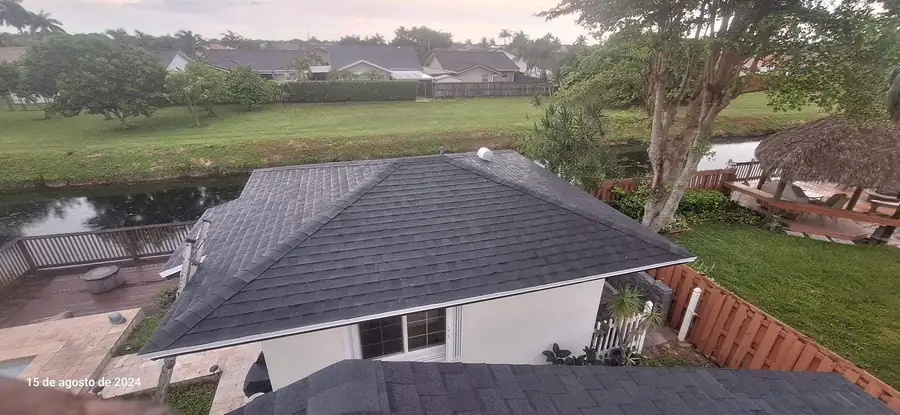
Asphalt shingle — usually the lowest upfront cost and the lowest monthly payment if you finance. Expect roughly 20–30 years in South Florida with a proper HVHZ install; UV and heat shorten the low end. See our shingle roof page for the lines we install.
Concrete or clay tile — higher cost than shingle because of material weight, labor, and the underlayment system underneath, which is where most of a tile roof's waterproofing actually lives. The tile itself can last 30–50 years; the underlayment usually sets the real replacement clock. Tile is the default look in many Miami neighborhoods and HOAs. More on our tile roof page.
Standing-seam metal — typically at the top of the residential price range, with long life and strong wind performance when installed to its approval. Near the coast, panel material and finish matter because of salt exposure. See metal roofs.
Flat and low-slope — common on additions, Florida rooms, and many Miami homes with mixed roofs. Cost depends heavily on drainage, insulation, and membrane type. Many homes need a pitched section and a flat section priced together.
The 25% rule: when a repair turns into a replacement
Florida's 25% rule affects cost because it can turn a repair budget into a replacement budget. Under the Florida Building Code (Existing Building), when 25% or more of a roofing system or roof section is repaired, replaced, or recovered within a 12-month period, the entire system or section can be required to meet current code.
There is an important exception in Florida Statute 553.844(5): if the existing roof or roof section was built, repaired, or replaced in compliance with the 2007 Florida Building Code or later, only the portion being worked on has to meet current code. So the rule bites hardest on older roofs. If your roof predates that compliance path and storm damage crosses the 25% line, you may be pricing a full section replacement rather than a patch. Your building official applies the rule to your roof — get a licensed inspection before you assume either way. Our post on the signs you need a roof replacement in Miami covers the rule in more detail.
Insurance, roof age, and wind-mitigation credits
Cost is not only what you pay the roofer. In Florida, the roof also drives what you pay for insurance — and whether you can get it.
- Roof age and renewals. Many carriers look hard at older roofs. Under Florida Statute 627.7011, an insurer may not refuse to issue or renew a homeowner's policy solely because the roof is under 15 years old, and for older roofs it must allow an authorized inspection first. In practice, a roof approaching that age is often when homeowners start pricing replacement.
- Wind-mitigation inspection. After a new HVHZ roof, a wind-mitigation inspection documents roof covering, deck attachment, roof-to-wall connections, and roof shape. Those features can earn premium credits. Ask your agent what your carrier credits before you choose a system — it can change the real cost over time.
- Storm claims. If the replacement follows storm damage, your policy, deductible (often a separate hurricane deductible), and the 2022–2023 Florida insurance law changes all shape what the claim covers. We document roof conditions with photos for your claim; we are not a public adjuster and do not promise coverage.
Timing: hurricane season and scheduling
Hurricane season runs June 1 through November 30. Demand and lead times jump after a named storm, and that is the worst time to be shopping for a roof. Replacing in the drier months — roughly late fall through spring — usually means easier scheduling and fewer rain delays during tear-off. If your roof is near the end of its life, starting the estimate and permit process before summer is the cheapest move you can make.
How to compare two roof replacement estimates
When you lay bids side by side, check that each one states:
- Exact material and product line, with the NOA or approval it is installed under.
- Tear-off scope — layers removed and disposal included.
- Decking and wood allowance — the unit price for replacing bad plywood, fascia, or planks.
- Underlayment system and how edges, valleys, and penetrations are flashed.
- Permit and inspections — who pulls the permit and who schedules inspections.
- Licensing — a Florida certified roofing contractor license number you can look up.
- Workmanship warranty in writing, separate from the manufacturer's material warranty.
If a bid leaves out several of these, it is not cheaper — it is incomplete.
Paying for a new roof
Most Miami-Dade homeowners do not pay for a roof replacement in one check. Options include PACE (repaid through the property tax bill) and loans through GoodLeap or Service Finance, many with $0 down. Approval and terms are set by the program, not by us. See financing for details.
What to do next
- Get a licensed inspection with photos so you know whether you need a repair or a full replacement.
- Ask for a written, line-item estimate that covers every item in the comparison list above.
- Talk to your insurance agent about roof age, wind-mitigation credits, and your hurricane deductible.
- Pick your material based on budget, HOA rules, how long you plan to stay, and how close you are to the water.
Proper Roofing Inc. is a Florida Certified Roofing Contractor (CCC1331964) and Certified General Contractor (CGC1525978). We pull the permits and schedule the inspections for the roofing work we perform across Miami and South Florida. For a number that fits your home, schedule a free inspection and written estimate for your roof replacement — contact us or call (786) 999-5353. You can also browse finished jobs in our project portfolio.
About this article Author: Proper Roofing Inc. Technical review: Gil Ksheshiver, Owner, Proper Roofing Inc. Sources: Fla. Stat. § 553.844 · Fla. Stat. § 627.7011 Verify licenses at myfloridalicense.com.
Proper Roofing Inc. 1011 Ives Dairy Rd Suite 210, Miami, FL 33179 (786) 999-5353 · properoofing.com